
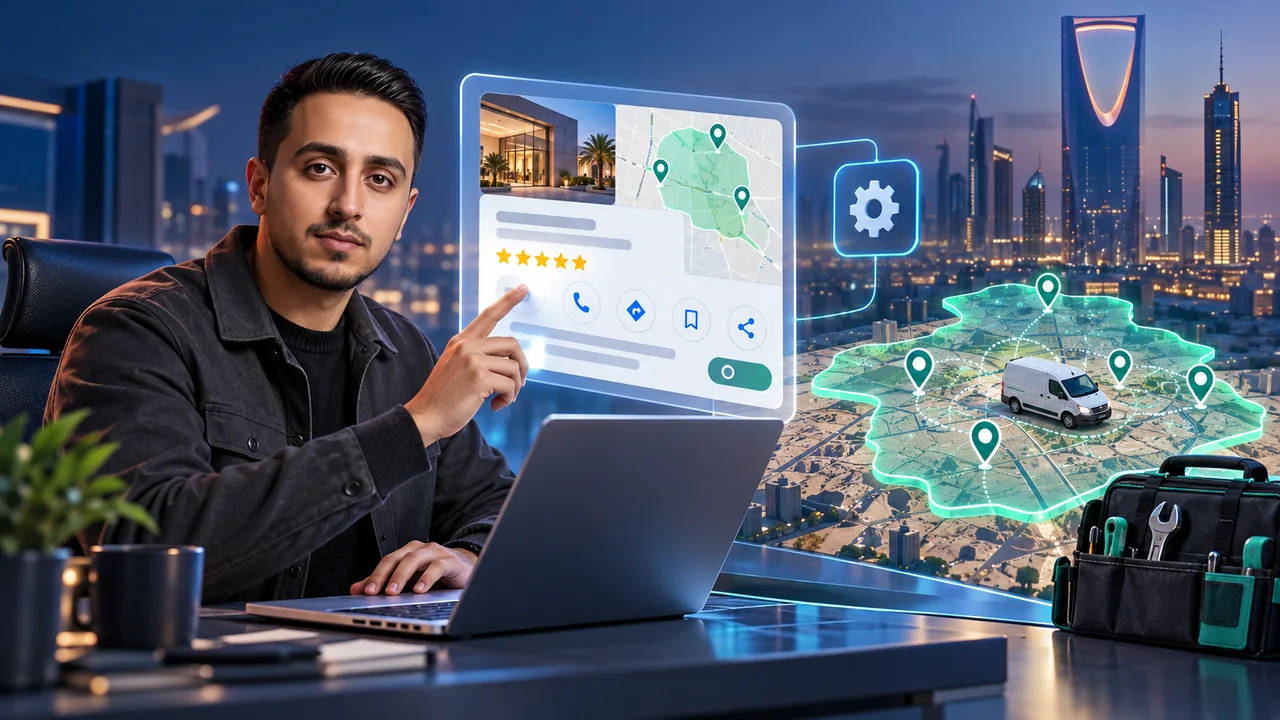
A Riyadh-focused guide to Google Business Profile eligibility, service areas, categories, website alignment, verification, reviews, and performance.
Choose the profile model that matches the operation
A Riyadh business may serve customers at a staffed location, travel to customers, or operate as a genuine hybrid. That distinction affects whether an address is displayed, which areas are selected, and what evidence may support verification. Do not create a storefront representation for an office that customers cannot visit, and do not use a service area as a substitute for a real operating footprint.
Use the business's real identity
The name should reflect the name used in the market, not a string of services and neighborhoods. Select the most accurate primary category, then add relevant secondary categories and services without stretching beyond what the company provides. Keep phone, website, hours, and location information current. Accuracy may feel less aggressive than keyword stuffing, but it creates a safer and more understandable entity.
Prepare verification as a proof sequence
Verification methods vary, and no specific method can be promised. If video is offered, plan a continuous sequence that can demonstrate the location or service model, branding, equipment, and authority to manage the business. Check that the profile and supporting materials tell the same story before recording. A second attempt should correct a known weakness rather than simply repeat the first.
Connect the profile to useful service pages
The website should explain the same services, city coverage, contact details, and operating model shown on the profile. Link to the most useful canonical page, make calls and enquiries easy on mobile, and publish content that answers customer questions. Creating dozens of interchangeable neighborhood pages is not a durable local strategy; pages need distinct purpose and useful evidence.
Build a review process around real customers
Ask customers after a completed, genuine interaction and make the request easy without prescribing sentiment. Do not buy reviews, use employees as customers, offer prohibited incentives, or organize bursts from the same device or network. Respond professionally, learn from recurring themes, and keep internal records so legitimate feedback can be explained if moderation systems remove it.
Measure actions, not a single map position
Local results vary by search wording, distance, context, device, and competition. Review profile views, calls, directions, website clicks, search queries, landing-page conversions, and the quality of enquiries over time. Segment by service and area where possible. The goal is a stable source of qualified local demand, not a screenshot of one favorable ranking from one location.